How to read a tire size sidewall for shop work
Decode P-metric, metric, LT, ST and T-type markings, plus the service description, before you mount or quote a replacement.
Last updated: November 11, 2026
Start with the size designation
The U.S. Tire Manufacturers Association Care and Service manual lists the size systems shops still see: P-metric, metric (also called Euro-metric), LT-metric, LT high flotation, LT numeric, European commercial metric (C-type), ST special tires for trailers, and T-type temporary spares. Letters in the size have fixed meanings. P is P-metric passenger, LT is light truck, C is European commercial, ST is a special trailer tire, and T is a temporary spare. R means radial construction, D is diagonal (bias), B is belted bias, and F is used for self-supporting run-flat tires.
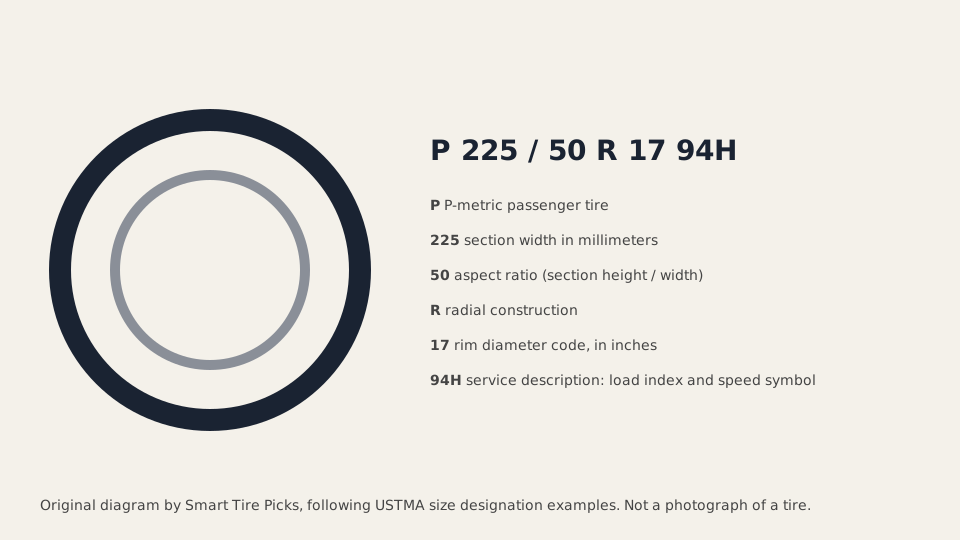
A typical passenger example in that manual is P225/50R15 90H. P marks a P-metric tire, 225 is the nominal section width in millimeters, 50 is the aspect ratio (section height divided by section width), R is radial construction, 15 is the rim diameter code, and 90H is the service description: load index 90 and speed symbol H. A metric (Euro-metric) size looks the same but has no P prefix, for example 225/45R17 91H. USTMA notes that size designations without a service description are no longer in general use.
For a worked diameter comparison after you decode the size, use the tire size calculator. For the buying steps from the door placard, see how to choose the right tire size.
Light truck, trailer and spare markings
LT-metric sizes add a load range, for example LT265/75R16 Load Range E. High-flotation light-truck sizes can lead with overall diameter and width in inches, such as 31X10.50R15LT. C-type commercial metric sizes (for example 225/70R15C) and LT numeric sizes are also in the USTMA list. Temporary spares use a T prefix, such as T115/70R15. Do not treat a T-type spare, an ST trailer tire or an LT tire as interchangeable with a P-metric or metric passenger size just because the numbers look close. Load range, inflation capability and intended use are different; see LT vs P-metric tires and spare tire limits.
What else is on the sidewall
USTMA says the sidewall also carries the brand, model, size, speed rating, maximum load, maximum inflation and safety warnings. The maximum inflation on the sidewall is not the vehicle set pressure. Set cold pressure from the door placard or owner's manual, and never above the maximum listed on the tire. Load index and speed symbol are covered in more detail in load index and speed rating. Extra Load or XL markings are explained in XL vs SL tires. The four digit date code at the end of the DOT number tells you when the tire was made; see how to read the DOT date code.
FAQ
What does P225/50R17 94H mean?
In the USTMA size system, P marks a P-metric passenger tire, 225 is the nominal section width in millimeters, 50 is the aspect ratio, R is radial construction, 17 is the rim diameter code in inches, and 94H is the service description: load index 94 and speed symbol H. A size with no P prefix is a metric, or Euro-metric, tire.
What is the difference between a P-metric tire and a metric tire?
Both use millimeter section width and an aspect ratio, but P-metric sizes begin with P and metric (Euro-metric) sizes do not. USTMA lists them as separate designation systems. Load and inflation can differ even when the numbers look the same, so confirm the service description and the tire maker load table, not just the size line.
What does LT or ST mean on a tire?
LT means light truck. ST means special tire for trailers. USTMA also lists C-type European commercial metric tires. These are not the same as P-metric or metric passenger tires. Match the type the vehicle or trailer maker specifies, and do not mix passenger and light-truck types on the same vehicle.
Is the number after R the wheel size I must use?
It is the rim diameter code, and it must match the rim exactly. USTMA says always replace a tire with another tire of exactly the same bead diameter as the rim, and gives the example that a 16 inch tire goes on a 16 inch rim, never on a 16.5 inch rim. See our rim width fitment guide for the mounting warning.
Where do I find the load index and speed rating?
They are the service description at the end of the size, for example 94H or 91V. USTMA notes that sizes without a service description are no longer in general use. Confirm both meet or exceed the vehicle maker requirement; our load index and speed rating guide has the shop checks.
Is the sidewall maximum PSI the pressure I should set?
No. USTMA says that when setting pressure on a substitute tire you should never exceed the maximum pressure listed on the sidewall, but the operating pressure comes from the vehicle tire placard. Use the placard or owner manual cold pressure, or a new required pressure the installer documents if a different size needs it.
Sources
- USTMA, Care and Service of Passenger and Light Truck Tires (2017 PDF): size designation systems, letter meanings, P-metric and metric examples, LT and T-type examples, sidewall information, and the service description
- USTMA, Care and Service of Passenger and Light Truck Tires (resource page): landing page for the same manual
- Image policy: how diagrams and photographs on this site are credited