Tell us your vehicle, climate, driving and top priority, and the picker suggests a tire category with plain English reasons. Then use the guides below to check size, load index, speed rating and the snow symbol.
Which tire picker
Answer four questions. The picker runs only in your browser, needs no login and stores or sends nothing. It suggests a tire category, not a brand or model.
A rough guide based on the general guidance in the sources below. Your door placard, the vehicle maker and a licensed installer take priority.
Which tire for...
Which tire should I get for my SUV or crossover?
Most crossovers and SUVs that stay on pavement are best matched with a highway all season or crossover/SUV touring all season tire. Choose an all weather tire with the 3PMSF symbol if you get real snow, and all terrain only if you leave the pavement.
Read the guide →
Which tire should I get for my pickup truck?
For a pickup that mostly drives paved roads, a highway all season tire is the usual match. Choose all terrain if you work or play off pavement, and an LT tire in the load range your truck specifies if you haul or tow heavy.
Read the guide →
Which tire should I get for my electric vehicle?
For an EV, start with load: if the placard or original tires say HL, the replacement must be HL. After that, look for low rolling resistance for range and quiet construction, in the season category that suits your climate.
Read the guide →
Which tire for snow if you don't want winter tires?
If you want one set of tires year round and still see snow, choose an all weather tire with the three peak mountain snowflake (3PMSF) symbol. An M+S marking alone does not mean the tire passed a snow test.
Read the guide →
Which tire should I get for highway commuting?
For a car that racks up highway miles, a touring all season tire is the usual match. Grand touring leans toward quiet, comfort and handling; standard touring leans toward long tread life.
Read the guide →
Which tire should I get for towing?
For towing, the tire category matters less than load capacity. Use the size, load index and load range your vehicle maker specifies (often an LT tire on trucks), set pressure from the owner's manual for towing, and keep the trailer on its own correct tires.
Read the guide →
Which tire should I get for my minivan?
Most minivans are best matched with a touring all season tire: standard touring if tread life and cost per mile matter most, grand touring if you want a quieter, more composed ride. Make sure the load index covers a fully loaded van.
Read the guide →
Which tire should I get for a sports car?
If it stays warm where you drive, a max performance summer tire gives the most grip. If you need one tire year round, an ultra high performance all season tire trades some grip for cold weather use. Below about 45°F, summer tires should come off.
Read the guide →
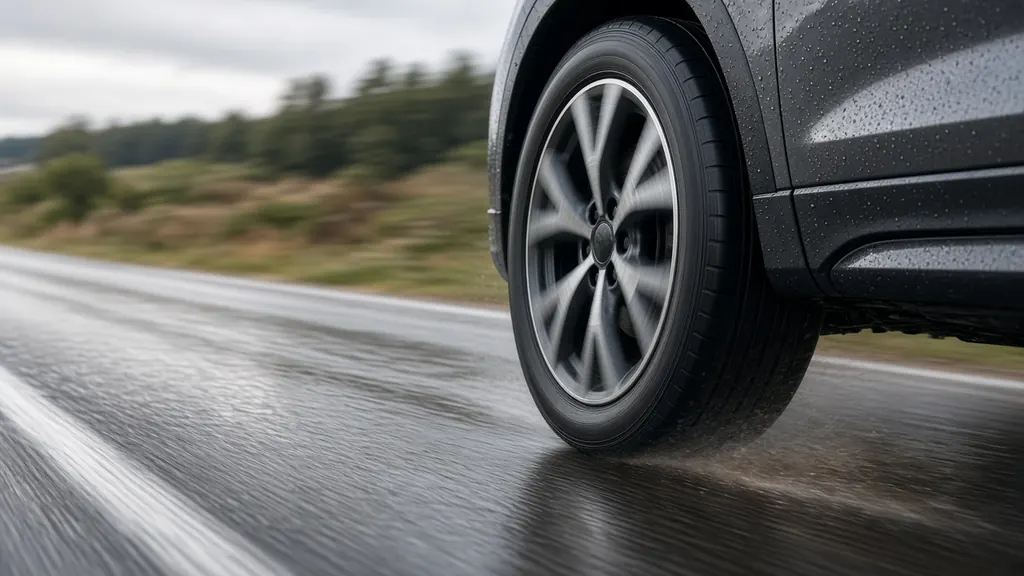
Which tire should I get for rain?
For wet roads, choose a category built for wet grip, compare the UTQG traction grade among your shortlist, and replace tires before tread runs low. Remember the traction grade measures straight ahead wet braking only.
Read the guide →
Which tire should I get for a hot climate like Florida?
Where it rarely gets cold, you do not need winter capability. A grand touring all season tire suits most drivers, and summer tires are an option in places that stay warm. Check the UTQG temperature grade and keep pressure at the placard value.
Read the guide →
Which tire should I get for gravel and dirt roads?
For a graded gravel road or dirt driveway, a highway all season tire is usually enough. If you drive loose dirt, sand, mud or rocks often, an all terrain tire is the better tool, and LT construction adds toughness.
Read the guide →
Which tire should I get for a Jeep Wrangler style 4x4?
If your 4x4 spends most of its miles on pavement with weekend trails, choose an all terrain tire. Pick mud terrain only if you regularly drive deep mud, loose soil or rock, and a highway all season if you rarely leave the road.
Read the guide →
Which tire should I get for a compact or economy car?
Match the door placard first. A cheaper tire in the same size is the right tire only when its load index and speed rating are at least what the vehicle maker lists. After that, the UTQG treadwear number is the federal way to compare tread life on the government course.
Read the guide →
Which tire should I get for mountain driving and chain laws?
A tire with the mountain snowflake meets a packed snow test and carries the mud and snow letters. It does not replace chains when the sign requires them. California, Colorado, and Washington write that sign differently, and Colorado's own pages do not all agree.
Read the guide →
Which tire should I get for a hybrid?
For a hybrid or plug in hybrid, start with the door placard: same size, a load index at least as high (XL or HL if that is what it lists) and a speed rating at least as high. Then pick a low rolling resistance tire in a touring all season or all weather tread for your climate, and keep it at placard pressure.
Read the guide →
Which tire should I get for an AWD car?
Match all four tires in size, brand, tread pattern and circumference. A worn tire is a smaller tire than a new one with the same size code. Then pick the tread for your climate.
Read the guide →
Which tire should I get for ice?
The snowflake is a packed snow test. The ice grip symbol needs an Ice Grip Index of at least 1.18 under ISO 19447. Studs are a separate choice, and only in the season your state allows.
Read the guide →
All weather vs all season vs winter
How the sidewall marks differ and which type fits your winters.
Read the guide →