UTQG grades: a treadwear 200 should last twice a grade 100
On the Uniform Tire Quality Grade, NHTSA assigns the control tire a treadwear grade of 100. A tire graded 200 should wear twice as long as that control tire on the government course. It is a comparison, not a promise of miles on your car, and it never outranks the door placard.
Last updated: November 20, 2026
What the three grades are
UTQG is a federal consumer information rule, 49 CFR 575.104. It applies to new pneumatic tires for passenger cars. It does not apply to deep tread winter type snow tires, space saver or temporary use spare tires, tires with a nominal rim diameter of 12 inches or less, or limited production tires as that section defines them. Checked in the eCFR text, 20 November 2026. A winter tire can be legal and still have no UTQG number. That absence is not a grade of zero.
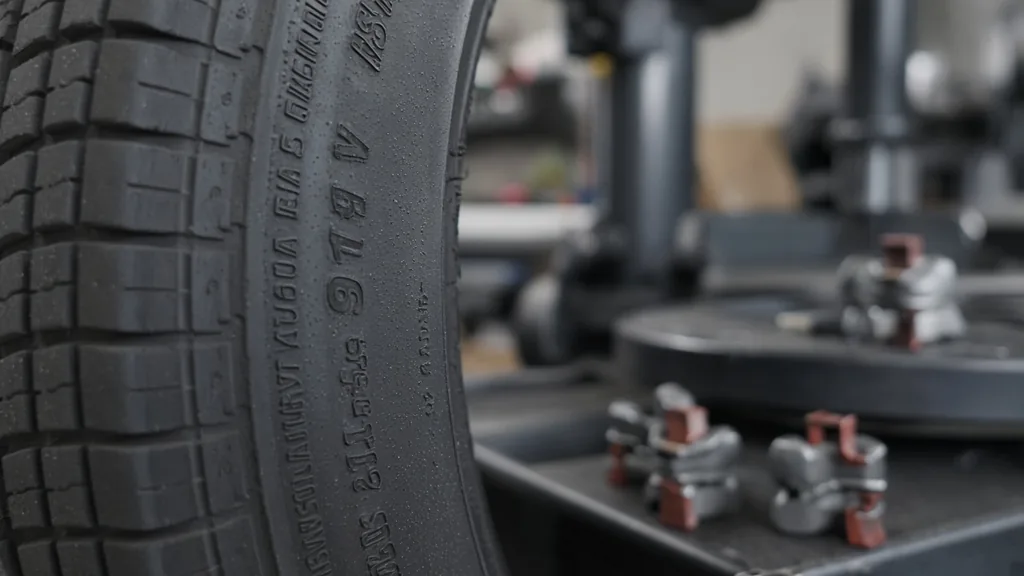
Covered tires are graded for treadwear, traction, and temperature resistance. The grades are molded on the sidewall and, for many tires offered for sale, printed on a paper label. A typical molding looks like TREADWEAR 400 TRACTION A TEMPERATURE A. Read the tire in front of you. That example is only a shape.
These grades are not a government safety certificate and not a ranking of which tire is safest for every car. Covered passenger car tires still have to meet the federal safety standards. We have not run the UTQG course.
What NHTSA says the current mix looks like
The TireWise page, read 20 November 2026, describes the share of current tires. It does not print the day that mix was counted, so this is the mix NHTSA was publishing on the day we read it, not a figure we measured.
| Grade | Share of current tires, as NHTSA lists it |
|---|---|
| Treadwear below 200 | 15 percent |
| Treadwear 201 to 300 | 25 percent |
| Treadwear 301 to 400 | 32 percent |
| Treadwear 401 to 500 | 20 percent |
| Treadwear 501 to 600 | 6 percent |
| Treadwear above 600 | 2 percent |
| Traction AA | 15 percent |
| Traction A | 77 percent |
| Traction B | 7 percent |
| Traction C | NHTSA says only 4 tire lines |
| Temperature A | 62 percent |
| Temperature B | 34 percent |
| Temperature C | 4 percent |
Most tires in that list are traction A, not AA. A high treadwear number is common in the 301 to 400 band and uncommon above 600. Use the table to see whether a number is ordinary, not to declare a winner.
Treadwear
49 CFR 575.104 says each tire is graded with the word TREADWEAR and a two or three digit number, expressed as a percentage of the NHTSA nominal treadwear value. Grades come in multiples of 20, and the rule's own examples are 80, 120, and 160. In the explanation consumers are shown, a tire graded 150 would wear one and one half times as well on the government course as a tire graded 100.
NHTSA TireWise puts the same idea in shopping language: the control tire is grade 100, and a grade of 200 should wear twice as long as the control tire. A higher number should take longer to wear down. Your miles will not match the course. Alignment, pressure, load, road texture, climate, and driving style all move the result. The number is not a mileage warranty. The warranty booklet is a separate document. For how those miles show up on the tire, see how long tires last and tread depth.
Traction, from AA down to C
49 CFR 575.104 lists the traction grades from highest to lowest as AA, A, B, and C. They represent the tire's ability to stop on wet pavement, measured on specified government asphalt and concrete. A tire marked C may have poor traction. The required warning says the grade is based on straight ahead braking tests and does not include acceleration, cornering, hydroplaning, or peak traction.
NHTSA TireWise says a higher traction grade should let a car stop on wet roads in a shorter distance than a lower grade. That is still the straight stop, not a rain storm in a corner. If wet grip is why you are shopping, start with which tire for rain, then use the letters to compare placard correct tires. Do not treat traction AA as proof a tire will handle every wet corner.
Temperature, from A down to C
49 CFR 575.104 says the temperature grades are A, then B, then C. They represent resistance to generating heat and the ability to dissipate heat on a specified indoor laboratory test wheel. Sustained high temperature can cause the tire material to degenerate and can shorten tire life, and excessive temperature can lead to sudden tire failure. Grade C corresponds to a level of performance which all passenger car tires must meet under Federal Motor Safety Standard No. 109, which is the name printed in the UTQG explanation. Grades B and A represent higher levels on that laboratory wheel than the minimum required by law.
The same explanation warns that the temperature grade is established for a tire that is properly inflated and not overloaded. Excessive speed, underinflation, or excessive loading, separately or together, can cause heat buildup and possible tire failure. Keep cold pressure at the placard value.
What UTQG does not do
- It does not replace load index and speed rating.
- It does not approve a different size. The door placard still governs.
- It does not grade deep tread winter type snow tires, space saver spares, or tires on rims of 12 inches or less.
- It does not measure ice, cabin noise, or which tire fits your commute.
- It is not a test Smart Tire Picks ran.
A practical order: copy the placard, shortlist tires that meet size, load index, and speed rating, then compare UTQG among those tires only. Have a licensed installer mount them.
Frequently asked questions
Is a higher UTQG treadwear number a guarantee of longer life on my car?
No. NHTSA says a grade of 200 should wear twice as long as the grade 100 control tire on the government course. Alignment, pressure, load, roads, climate, and driving style change the miles you get.
Does a traction AA grade mean the tire is safest in the rain?
No. eCFR says the traction grade is straight ahead wet braking on specified government surfaces. It does not include acceleration, cornering, hydroplaning, or peak traction. On the TireWise page read 20 November 2026, 77 percent of current tires were traction A and 15 percent were AA.
What does temperature grade C mean?
eCFR says grade C is the level all passenger car tires must meet under Federal Motor Safety Standard No. 109. A and B are higher on the laboratory wheel. The grade assumes the tire is properly inflated and not overloaded.
Do all tires carry UTQG grades?
No. 49 CFR 575.104 applies to new pneumatic passenger car tires, and it excludes deep tread winter type snow tires, space saver or temporary use spare tires, tires with nominal rim diameters of 12 inches or less, and limited production tires as the rule defines them.
Should UTQG override my door placard?
No. Size, load index, and speed rating still have to satisfy the placard and the owner's manual. A grade does not approve a different size.
Sources
We paraphrase public references and link them so you can read the full wording. Pages dated in the list were opened 20 November 2026. We did not test any tire for this page.
- 49 CFR 575.104: who must be graded, the exclusions including 12 inch rims and deep tread winter type snow tires, treadwear as a percentage of the NHTSA nominal value in multiples of 20, traction grades AA through C and the straight ahead braking limit, temperature grades A through C and the Federal Motor Safety Standard No. 109 reference (read 20 November 2026)
- NHTSA TireWise: control tire graded 100, a grade of 200 should wear twice as long, shares of current tires by treadwear band and by traction and temperature letter (read 20 November 2026)
- Image policy: how the AI generated photo is labeled