All-season vs winter tires
All-season tires may be enough for mild winters with rare ice and light snow. Winter tires are often considered where sub-freezing temperatures and packed snow or ice are regular, at the cost of a second set, storage, and seasonal swaps.
Want one set that handles snow? See which tire for snow without winter tires or try the Which tire picker.
Last updated: October 28, 2026
Core difference
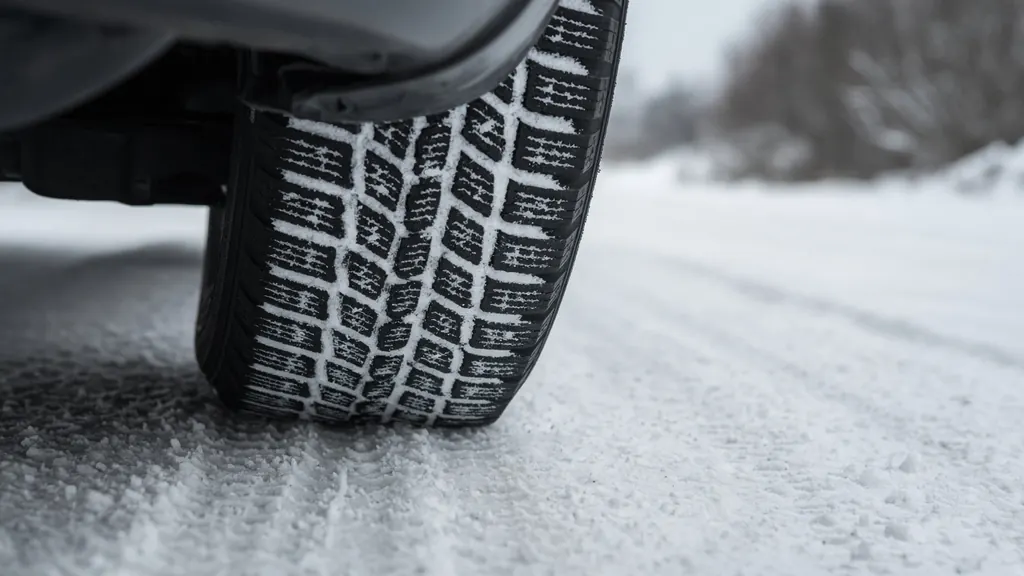
All-season tires aim for acceptable performance across a wide range of conditions. Winter tires prioritize cold-temperature flexibility and snow/ice traction design. Neither category removes the need for appropriate speeds, pressures, and maintenance.
When all-seasons may be enough
- Mild winters with rare ice and light snow
- Preference for a single mounted set and simpler logistics
- Vehicles that see mostly clear paved roads
When winter tires are often considered
- Regular sub-freezing temperatures and packed snow or ice
- Hills, rural roads, or early/late season storms
- Willingness to store a second set and schedule seasonal swaps
Cost and logistics
A winter set adds tire (and sometimes wheel) cost plus storage and mount/balance cycles. Some drivers keep winters on dedicated wheels to simplify swaps and preserve TPMS sensors — discuss options with your installer.
Symbols and labels
Look for the three-peak mountain snowflake (3PMSF) on tires marketed for severe snow service. M+S alone is a mud-and-snow designation with a different meaning — read manufacturer explanations for your model.
The 45°F rule of thumb
Michelin's tire buying guide says winter tire compounds stay flexible below about 45°F (7°C), the point where it says summer and all-season compounds start to harden and lose grip. It suggests switching to winter tires when average daily temperatures fall below that level and switching back once temperatures stay above it. Treat this as a manufacturer guideline, not a fixed law; your local roads and storms matter as much as the thermometer.
What the sidewall marks actually mean
| Mark | What it indicates | Source |
|---|---|---|
| M+S (mud and snow) | A tread design marking common on all-season tires. Michelin notes it is not a severe snow certification. | Michelin |
| 3PMSF (three peak mountain snowflake) | Under the USTMA definition, a passenger or light truck tire that reaches a minimum snow traction index against a standard reference tire in a packed snow test (ASTM F1805) may carry this symbol next to its M+S marking. | USTMA TISB 37 |
| Ice grip symbol | A newer mark Michelin describes as indicating added braking performance on ice, seen on some winter tires. | Michelin |
The middle option: 3PMSF all-season or all-weather tires
Some all-season tires carry the 3PMSF mark, and many shops call these all-weather tires. Michelin describes them as a middle ground for drivers who want tested severe snow traction without managing two seasonal sets. They are still a compromise: a dedicated winter tire is built only for cold conditions, while a 3PMSF all-season also has to work in summer heat. Example on this site: Michelin CrossClimate 2 overview.
Fit four, not two
Michelin recommends installing winter tires on all four wheel positions. Its FAQ warns that mixing winter tires on one axle with non winter tires on the other can upset vehicle balance, causing understeer or oversteer depending on which axle has less grip. AWD or 4WD helps you get moving, but Michelin notes it does not replace winter tires for braking and cornering.
Quick decision table
| Your winters | Common approach |
|---|---|
| Mostly above freezing, occasional frost or light snow | A quality all-season tire may be enough |
| Regular cold snaps, some snow, want one set | Consider a 3PMSF all-season (all-weather) tire |
| Long periods below freezing, packed snow or ice, hills or rural roads | Dedicated winter set on four wheels, swapped seasonally |
This table is general guidance based on the sources below, not a safety guarantee. Local law, road conditions and your vehicle maker's guidance come first.
FAQ
Do winter tires wear out faster?
Michelin says winter tires wear at a comparable rate when used in cold months, but wear faster if left on through warm weather, which is one reason to swap them off in spring.
Why don't winter tires have UTQG treadwear grades?
According to Michelin's FAQ, winter tires are not assigned UTQG treadwear, traction or temperature grades. See our UTQG guide for how grades work on other tires.
Related: winter tires guide · three-category overview · seasonal tire storage.
Sources
Accessed 28 October 2026. Manufacturer pages describe the maker's own claims; we have not verified them by testing.
- Michelin USA, Summer vs winter vs all-season tires — all-season limits in heavy snow and ice; M+S is not a severe snow certification; winter compounds stay flexible below about 45°F (7°C); all-weather 3PMSF tires as a middle ground
- Michelin USA, Winter tire buying guide — what to look for on a winter tire sidewall, including 3PMSF and the newer ice grip symbol
- Michelin USA, FAQs — Michelin recommends a full set of four winter tires; winter tires carry no UTQG grades
- USTMA, Tire Information Service Bulletin 37: definition of tires for use in severe snow conditions (PDF) — industry definition of the 3PMSF severe snow symbol and the packed snow traction test behind it
Next
Check retailers for sizes that meet your placard requirements.