Tire and rim width fitment for shop mounts
Mount only on an approved rim width, match the tire and rim diameter exactly, and check clearance and rim load before a size change.
Last updated: November 11, 2026
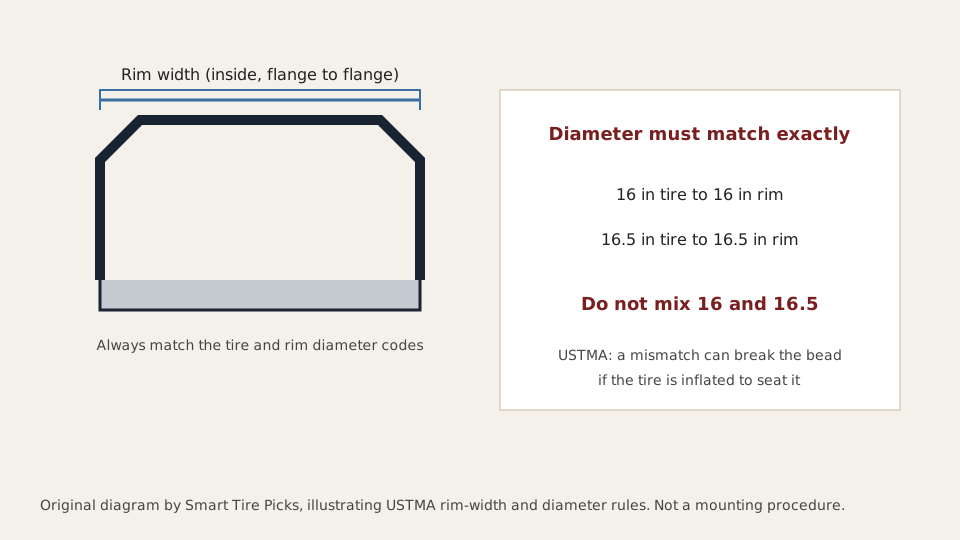
Approved width, then exact diameter
USTMA's Care and Service manual is direct: only mount tires on approved rim widths, and always use approved tire and rim combinations for diameter, width and contour. The approved width range comes from the tire manufacturer's product literature, not from a guess or from a nearby size that looks like it will seat. Rim width is measured on the inside of the rim, between the two flanges.
The diameter code must match exactly. USTMA warns that there is a danger of serious injury or death if a tire of one bead diameter is installed on a rim of a different diameter. Always replace a tire with another tire of exactly the same bead diameter as the rim. A 16 inch tire goes on a 16 inch rim. A 16.5 inch tire goes on a 16.5 inch rim. Never mix those two. The manual says a 16 inch tire can physically pass over the flange of a 16.5 inch rim, but it cannot be inflated into position against the flange; trying to seat the bead with more pressure can break the bead with explosive force. Rims of different diameters and tapers cannot be interchanged.
USTMA also says tire changing should be done by trained personnel using proper tools and procedures, and that a tire should not be inflated unless it is secured to a vehicle, a tire mounting machine or another restraining device. Never introduce a flammable substance into a tire to seat the beads. Silicone, petroleum or solvent-based lubricants must not be used; use a lubricant made for bead seating.
If the size or wheel is changing
If the replacement tire size changes, USTMA says the rim or wheel must have adequate load and inflation pressure capability. If the rim is not identified for that service, or the service would exceed its rated capacity, consult the rim or wheel manufacturer. Never exceed the maximum pressure or load capacity of the rim or wheel. Some rims may not allow correct bead seating unless the original-equipment tire is used; check with the vehicle manufacturer in that case.
Acceptable load index or overall diameter does not imply acceptable vehicle clearance. Body and chassis clearance must be checked at all four wheel positions, through full suspension travel, and for steering tires in full left and right turns. The outside circumference of all four tires must stay within the vehicle manufacturer's accepted tolerance, because diameter differences can affect handling, the speedometer and odometer, ABS, TPMS, 4WD or AWD systems and other electronics. See the tire size calculator and speedometer error after a size change.
Replacement tires must also have inflation-pressure capability and load-carrying capacity equal to or greater than the original tire at the placard pressure, and a speed rating equal to or greater than the vehicle requirement if the vehicle's speed capability is to be maintained. Never choose a smaller size or a lower load capacity than the original equipment tire at the specified placard pressure.
FAQ
What is an approved rim width?
It is the rim width range the tire manufacturer publishes for that tire size. USTMA says tires should only be mounted on approved rim widths and tells shops to use the tire maker product literature for those specifications. Rim width is measured on the inside of the rim, between the two flanges.
Can I mount a 16 inch tire on a 16.5 inch wheel?
No. USTMA says a 16 inch tire goes on a 16 inch rim and a 16.5 inch tire goes on a 16.5 inch rim, and that the two must never be mixed. A 16 inch tire may pass over a 16.5 inch flange, but it will not seat; inflating to force the bead can break the bead with explosive force.
Does a close overall diameter mean the wheel is safe?
No. USTMA says acceptable load index, load capacity or overall diameter does not imply acceptable vehicle clearance. Check fender, brake, shock tower and suspension clearance at all four positions, including full jounce, rebound and steering lock, and stay within the vehicle maker circumference tolerance.
Who decides if a wheel can take a higher inflation pressure?
The rim or wheel rating does. If you change tire size, USTMA says the rim must have adequate load and inflation capability, and that you should consult the rim or wheel manufacturer when the rim is not identified for that service or the service would exceed its ratings. Never exceed the maximum pressure or load capacity of the rim.
Can I use a petroleum or silicone lubricant to seat the bead?
No. USTMA says silicone, petroleum or solvent-based lubricants must not be used, and that shops should use commercially available lubricants made for bead seating. The manual also says never to introduce a flammable substance into a tire to seat the beads.
Do I need a new wheel when I plus-size a tire?
Often yes, because plus-sizing increases wheel diameter while trying to keep overall tire diameter close to stock. The new tire still needs an approved rim width, and the new wheel still needs adequate load and inflation capacity. See our plus-sizing guide and confirm the combination in the tire maker literature.
Sources
- USTMA, Care and Service of Passenger and Light Truck Tires (2017 PDF): approved rim widths, exact diameter match, 16 versus 16.5 inch warning, clearance checks, rim load and inflation limits, mounting safety and lubricant rules
- USTMA, Care and Service of Passenger and Light Truck Tires (resource page): landing page for the same manual
- Image policy: how diagrams and photographs on this site are credited