Tire wear patterns: what abnormal tread wear can mean
USTMA shows six examples of abnormal tread wear and lists vehicle and inflation problems that can cause it. A pattern is a reason to have the tire and the vehicle checked, not a DIY diagnosis by itself.
Last updated: November 12, 2026
Even wear across the tread is the usual goal of inflation, rotation and alignment. When wear is uneven, the U.S. Tire Manufacturers Association's Care and Service of Passenger and Light Truck Tires manual (2017) treats it as a maintenance clue. This page summarizes that chapter for shop and driveway checks. It is not a substitute for a tire service professional, and it does not assign one cause to each picture on its own.
What USTMA shows
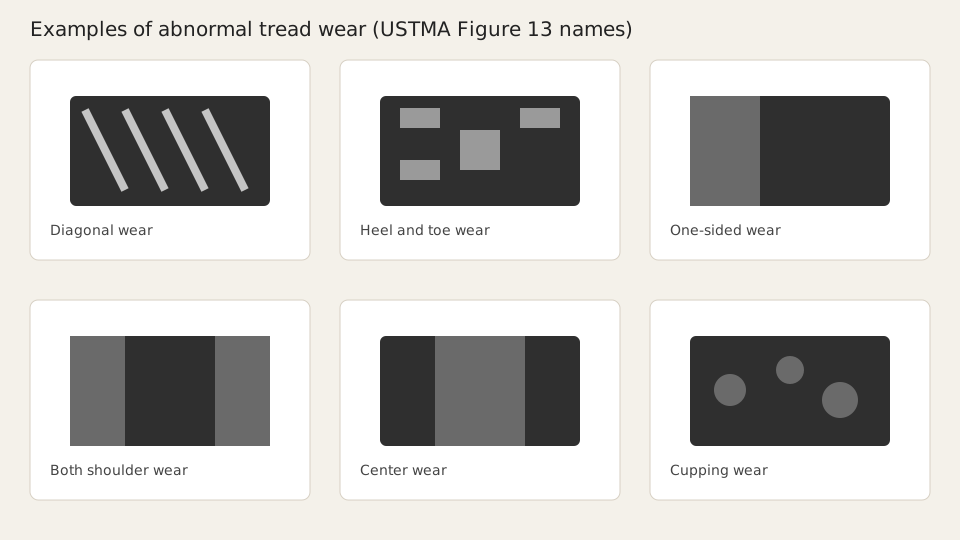
In its maintenance chapter, the care manual says there is a close relationship between several mechanical systems and the tires. Tires, wheels, brakes, shock absorbers, the drivetrain, and the steering and suspension systems have to work together for safe handling and optimum tread wear. Improper or inadequate vehicle maintenance can cause tires to wear rapidly, abnormally, or both. The manual then gives Figure 13 as examples of different types of abnormal tire wear. The labeled examples are diagonal wear, heel and toe wear, one-sided wear, both shoulder wear, center wear, and cupping wear.
The same chapter does not, in the surrounding text, map each of those six pictures to a single cause. It lists the conditions that can produce abnormal wear, and it says all of them can be adjusted or repaired. Read the pattern as a reason to inspect inflation and the vehicle, not as a self-contained diagnosis.
Causes the manual names
Improper tire inflation. USTMA says to use the inflation pressures specified by the vehicle manufacturer on the tire placard, certification label or owner's manual. Underinflation may result in rapid or abnormal tread wear, improper handling and decreased fuel economy. Overinflation can also result in rapid or abnormal tread wear, decreased traction and premature wear of suspension components. Improper inflation may cause a tire failure, including tread or belt separation, even at a later date. Check and adjust pressure, including the spare, at least once a month with a gauge. See our tire pressure and placard guides.
Vehicle wheel misalignment. If the wheels are not properly aligned, the manual says tires will experience stresses as if they were constantly cornering, which causes increased and abnormal tread wear. A qualified mechanic should correct misalignment. Front-wheel-drive vehicles and those with independent rear suspension need special attention to all four wheels. Four-wheel alignment can also identify "dog tracking," when the rear tires do not follow the paths of the front tires. Have geometry checked at the intervals in the owner's manual, or sooner if misalignment is suspected.
Lack of tire rotation. Rotation procedures exist to equalize tread wear and prolong tread life. By regularly moving a tire to another position, abnormal wear patterns that were starting to develop may be corrected. Do not include a temporary-use or T-type spare in those rotation patterns. See tire rotation patterns.
A tire and wheel assembly that is out of balance can cause abnormal tread wear from vibration and irregular road contact, which may be worse at specific speeds. Damaged wheels can make a tire contact the road unevenly; the damage may not be obvious and should be checked with proper measuring equipment. Brakes in disrepair can grab unevenly. Worn struts or shock absorbers will not dampen motion properly. Worn or loose suspension and steering parts, including worn ball joints, can also cause abnormal wear. Those checks belong with a tire or alignment professional. See balancing versus alignment.
Axle position also matters. Drive-axle tires see acceleration stresses; on a front-wheel-drive vehicle the front axle also steers and does most of the braking. Free-rolling rear tires may still show abnormal wear. Rotation is how the manual says you can help minimize that.
What to do when you see uneven wear
Set cold pressures to the placard, look at tread depth across the full width, and have a shop inspect the tire and the vehicle systems named above. A worn-out tire should be replaced. For depth and replacement signals, see tread depth and when to replace tires.
FAQ
What are the abnormal tread wear patterns USTMA shows?
Figure 13 in the USTMA Care and Service manual (2017) gives six examples: diagonal wear, heel and toe wear, one-sided wear, both shoulder wear, center wear, and cupping wear. The manual presents them as examples of abnormal wear, not as a stand-alone cause chart.
What does USTMA say can cause abnormal tire wear?
The care manual lists improper inflation (underinflation or overinflation), wheel misalignment including dog tracking, lack of rotation, an out-of-balance tire and wheel assembly, damaged wheels, brakes in disrepair, worn struts or shock absorbers, and worn or loose suspension and steering parts, including worn ball joints.
Can I tell the exact cause from the wear pattern alone?
Not from this manual's text. USTMA lists those conditions together and says they can all be adjusted or repaired. Use the pattern as a prompt to check placard pressures and to have a tire service professional inspect the tire and the vehicle.
Sources
- USTMA Care and Service of Passenger and Light Truck Tires (2017): maintenance conditions, Figure 13 examples of abnormal tread wear, inflation, alignment, rotation, balance, damaged wheels, brakes, and worn suspension parts. The manual was read on 12 November 2026.
- Image policy: how diagrams and photographs on this site are credited